VIROLOGY
CHRONIC HEPATITIS
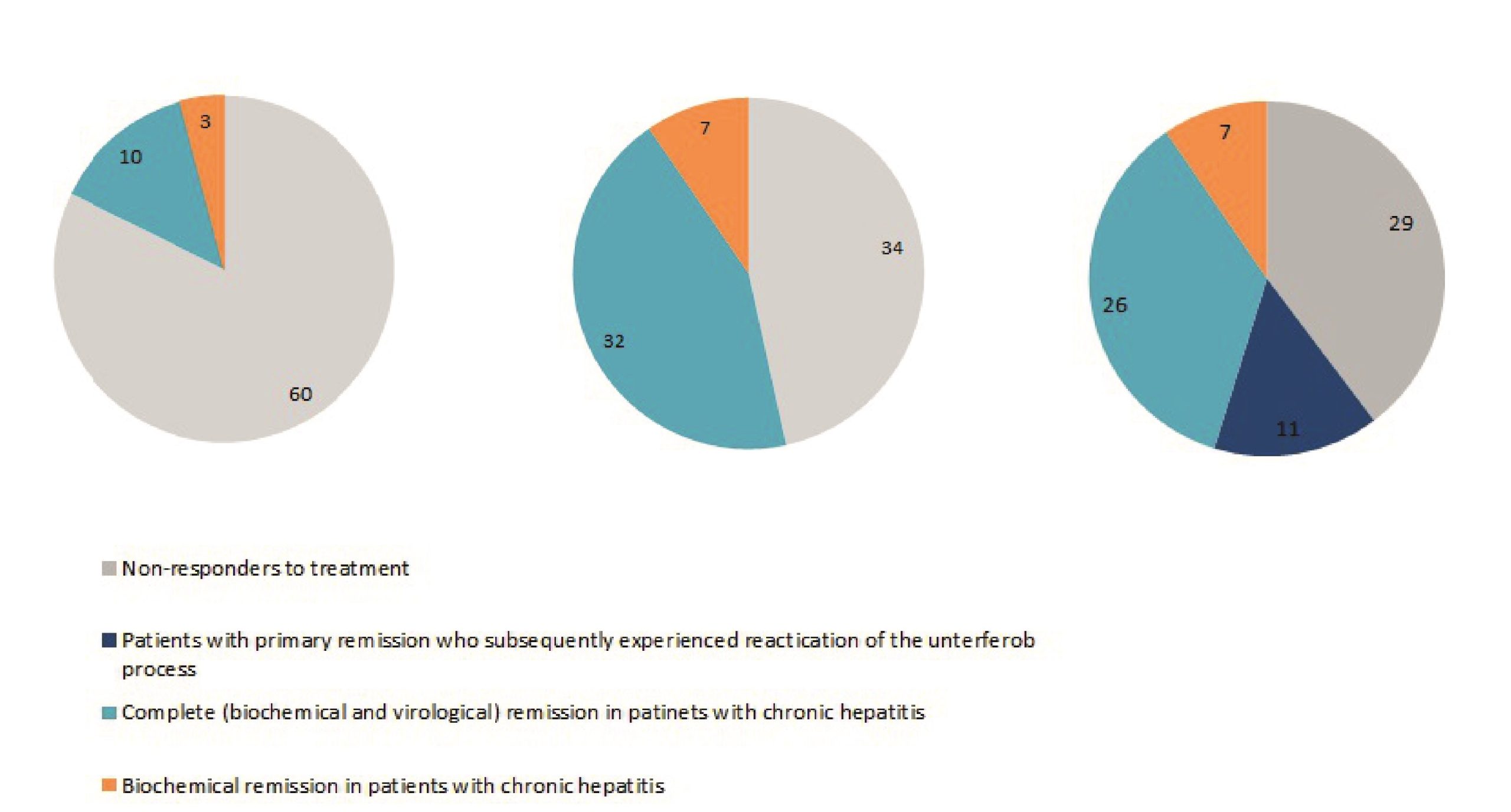
Patients: 73 patients (64 patients with chronic hepatitis C, 3 – with hepatitis B, 6 with mixed hepatitis)
Study design: One group. Vitafon with hepatoprotectors
Study duration: 12 months
Medical device: Vitafon-IR, Vitafon-T
Research methods: Biochemical and virological examinations
The results of physiotherapetutic treatment of patients with chronic viral hepatitis (СМP) using Vitafon-IR
- WITHOUT antiviral therapy.
- WITHOUT side effects, that usually occur with antiviral therapy.
The study conducted in Ukraine showed that vibroacoustic therapy complements microwave therapy effectively. The application of vibroacoustic therapy in combination with microwave therapy for 6 months in patients who did not receive antiviral therapy led to a significant reduction in asthenic, dyspeptic, and abdominal pain syndromes, restoration of liver function, significant normalization of lipid peroxidation indicators and antioxidant defense system, and stimulation of interferonogenesis. This allowed 14 out of 26 patients to achieve a reduction in the level of virological load by 2 lg copies/ml.
To establish the protocol preliminary studies were conducted on 16 patients. These studies revealed a consistent elevation in the level of alphaку interferon, with peak increases observed immediately after Vitafon-IR procedures. The procedures were administered once daily, every four days, for a duration of four weeks. Blood samples for analysis were collected 1 hour and 3 days after each procedure.
The dynamics of IF-a, IF-y, and ALT levels in the blood serum of patients during therapy, measured daily
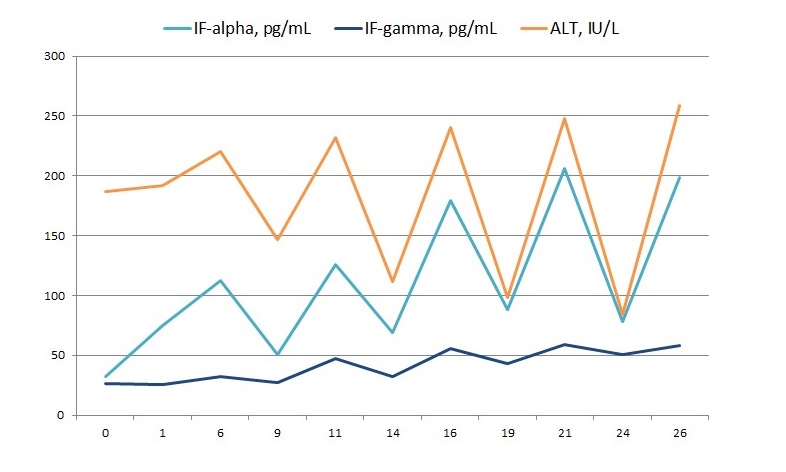
Hepatitis B (8 patients in the replication stage)
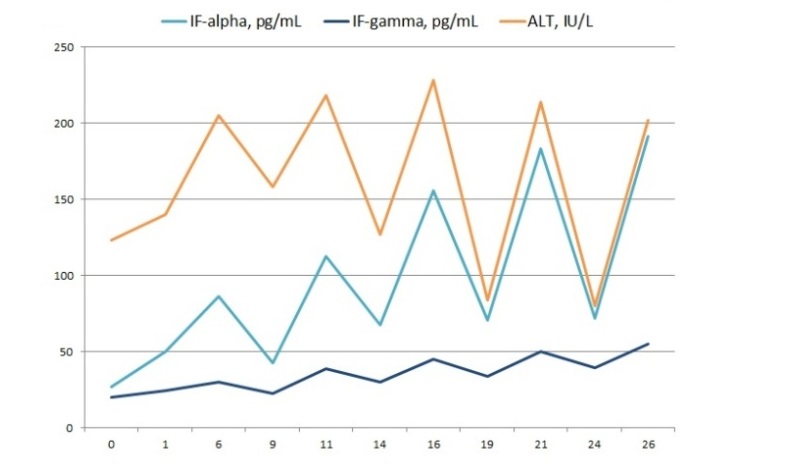
Hepatitis C (8 patients in the reactivation phase)
ACUTE VIRAL HEPATITIS A AND B
Patients: 50 patients with acute hepatitis А and B
Study design: Main and control group. 25 patients – Vitafon with standard drug therapy, 25 – only standard drug therapy
Study duration: 2 weeks
Medical device: Vitafon
Research methods: Assessment of biochemical parameters
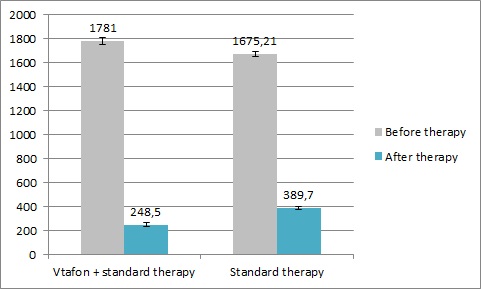
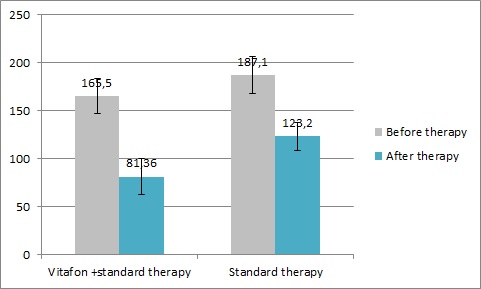
Vitafon therapy accelerates normalization of all biochemical parameters compared to the group receiving only standard drug therapy.
ALT activity (U/L)
Bilirubin activity µmol/h*l
NFLUENZA AND OTHER ACUTE RESPIRATORY VIRAL INFECTIONS (ARVI)
Patients: 23 patients experiencing ARVI more than 3 times a year. All patients have low induced concentrations of IFNα, while IFNγ levels were 2 and 1.5 times lower compared to the control group experiencing ARVI no more than once a year.
Study design: Main group 1а -11 patients- without Vitafon,
1b (12 patients) – with Vitafon
Study duration: 1 year
Medical device: Vitafon
Research methods: Assessment of biochemical parameters, collection of data on the frequency of illnesses, and the number of workdays lost throughout the year
Vitafon therapy affects the induction of interferon synthesis (IFN-α and IFN-γ) and brings them closer to the levels observed in individuals who rarely experience ARVI.

* The blood collection for interferon concentration analysis was conducted 15 minutes after the completion of the last procedure.
Regular Vitafon therapy enhances the body’s resistance to viral infections
During the period when the group regularly underwent Vitafon thereapy, there were 3.2 times fewer cases of ARVI compared to the control group. In the group without Vitafon, there were 49 cases of ARI recorded during the observation period, while in the Vitafon group, there were only 17.
The resistance increased to various types of ARVI, including influenza. Specifically, 43 out of 66 cases among the participants were serologically deciphered. In the 2003-2004 season, influenza A predominated (52.2%), followed by adenovirus infection (30.4%). In the 2004-2005 season, influenza A and B were equally prevalent (40.0% each), with parainfluenza accounting for 15.0% of cases.
In another study, the use of Vitafon within 72 hours from the onset of upper respiratory tract infection symptoms allowed for the reduction of intoxication. Symptoms of intoxication syndrome, such as weakness, joint pain, and overall malaise, were alleviated in 91% of patients within 30 hours of Vitafon application. The average duration of post-infection asthenic syndrome (poor mood, sharp decrease in physical and mental performance, fatigue) was 5 days, whereas it often lasts for 2 weeks.
SEROUS MENINGITIS
Patients: 32 patients with serous meningitis of a viral etiology
Study design: Main group 17 patients – Vitafon, control group – 15 patients
Study duration: 1 month
Medical device: Vitafon
Research methods: Assessment of symptoms and number of complications
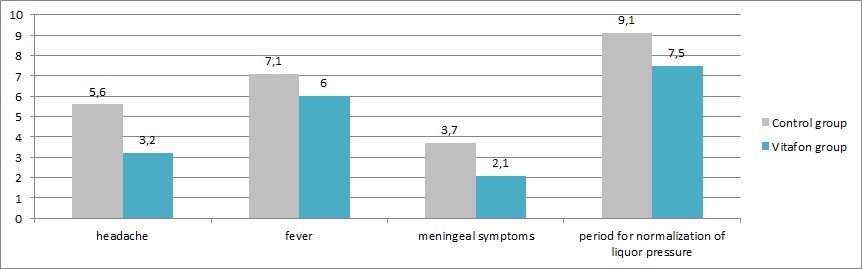
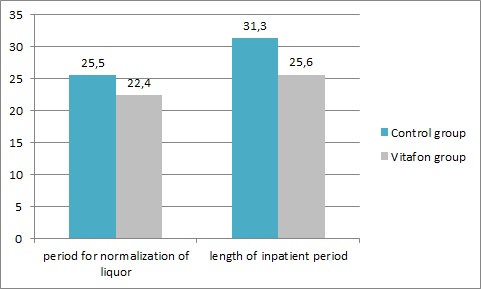
The research have shown that all serous meningitis symptoms regress faster in Vitafon group than in control. The possible reason for this positive effect is improving venous outflow from the inflamed meninges, reducing their swelling and more quickly reducing intracranial pressure. There were no complications of the disease fixed in the Vitafon group while in the control group 1 case of facial nerve paresis and 1 case of auditory nerve palsy were fixed.
Comparison of symptoms duration (in days)