

Patients: 20 patients with dyscirculatory encephalopathy of 1-2 stages and initial manifestations of cerebrovascular insufficiency in 1999, and another 80 patients
Study design: 20 patients: comparison before and after therapy (1999);
60 patients VAT and 20 patients – control group
Study duration: 2 weeks (10 sessions and 5 moths of follow-up observations)
Medical device: Vitafon
Research methods: Comparison of the manifestation of symptoms (anisoreflexia, etc.), biomicroscopy of the anterior segment of the eye, Holter ECG monitoring, Doppler echocardiography examination, triplex scanning of brachiocephalic arteries, indicators of psycho-physical tests of the autonomic nervous system
According to the research findings, the hemodynamic parameters
improved as follows:
• Blood flow in the vessels supplying the brain improved (demonstrated by the data
from triplex scanning of the branches of the brachiocephalic arteries).
• Cardiovascular system function improved, evidenced by a reduction
in left ventricular myocardial stiffness.
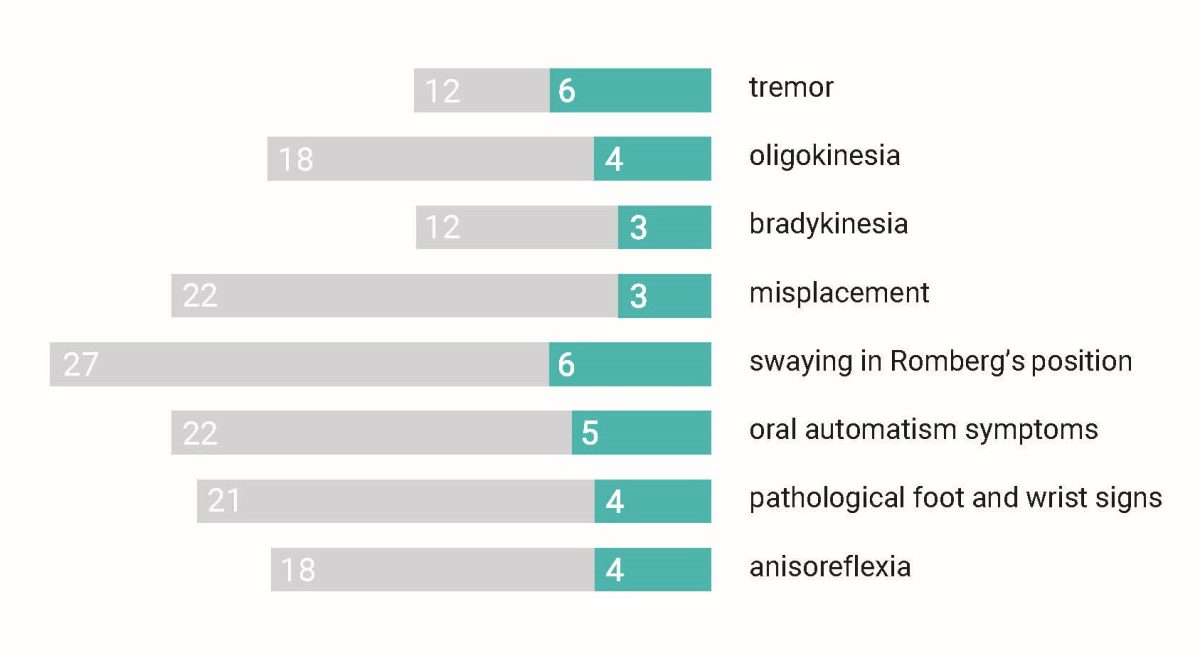
Coordination before and after Vitafon treatment (scores).
Noted improvements include:
• Regression of Parkinsonian disorders: revival of facial expressions, enrichment of accompanying movements, increased speed of voluntary movements, normalization of walking, reduction in the severity of propulsive and retropulsive movements, cessation of unexplained falls.
• Improvement in memory and attention.
• Increase in strength in paretic muscles to 4.5-5 points compared to the initial 3.5-4 points.
• Increase in range of motion in the limbs.
These results were stable and long-lasting, observed over a period of 1-5 months.
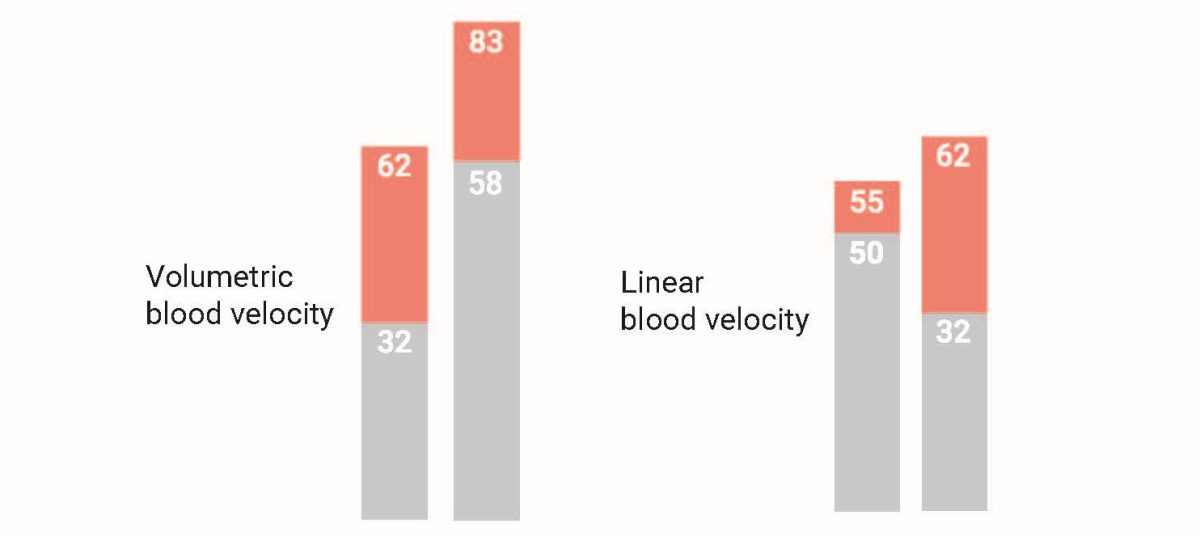
The dynamics of the brachiocephalic
artery triplex scanning data (%).
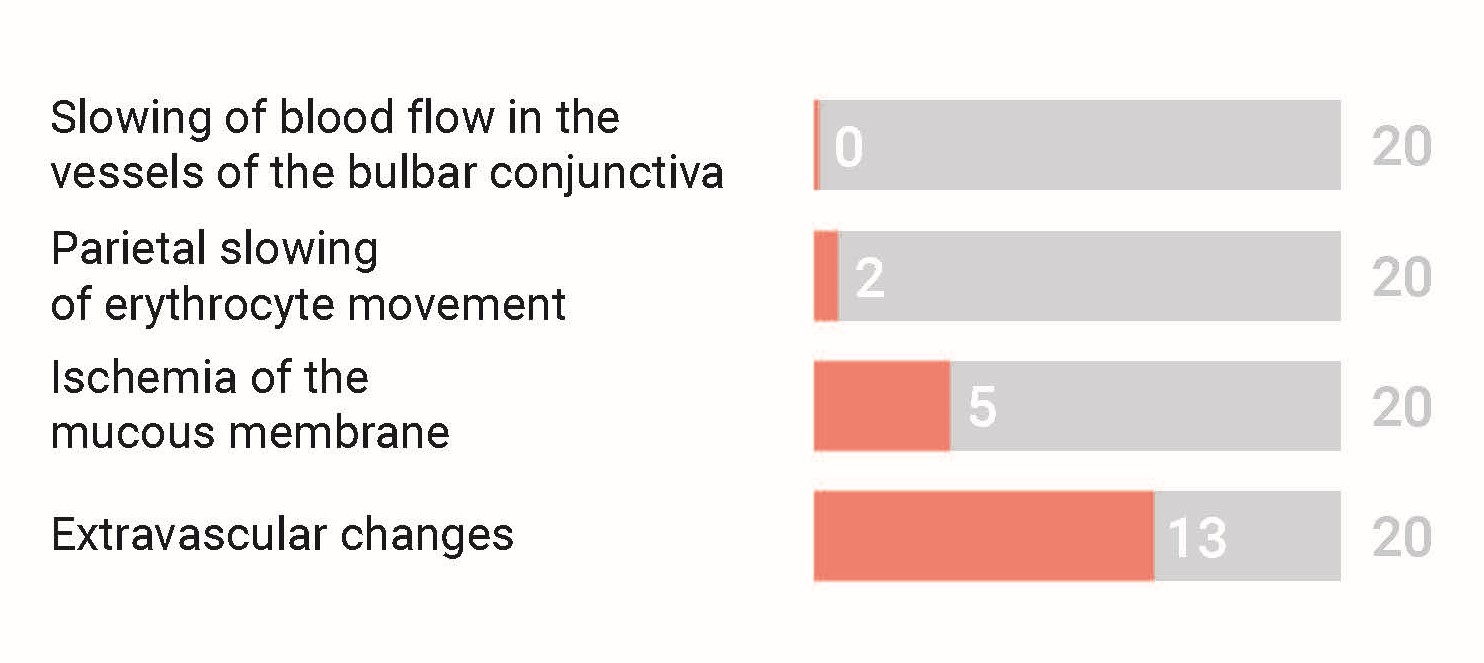
Dynamics of ocular microcirculation
(number of patients with symptoms).